Chikankari: The Elegance of White on White
Feb 11, 2026
Introduction
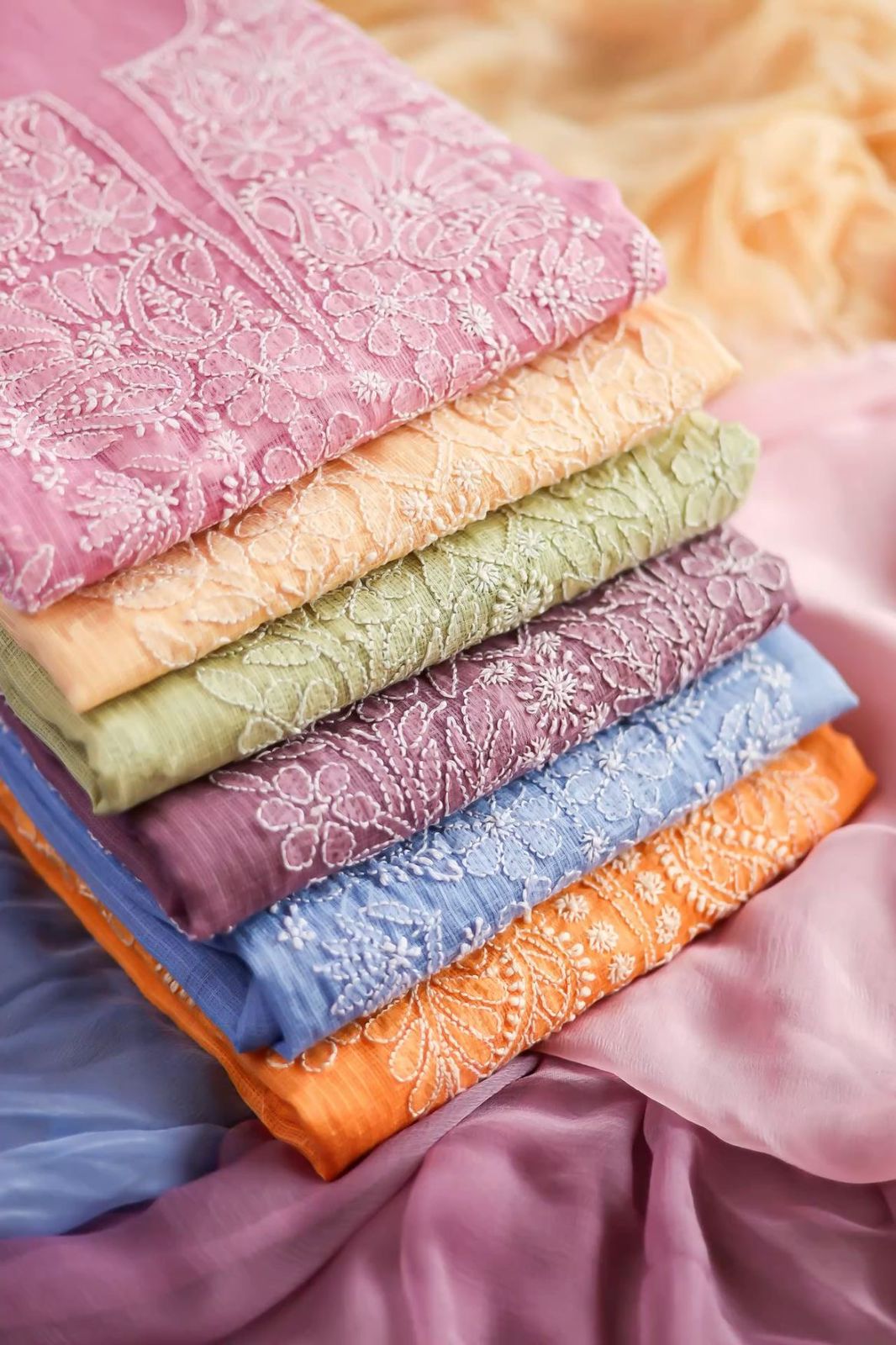
Chikankari embroidery, originating from Lucknow, challenges the common belief that art must rely on vibrant color to be beautiful. In a world that often equates richness with brightness, Chikankari stands quietly apart. Its white-on-white composition proves that elegance does not demand excess—it thrives in restraint.
Main Discussion
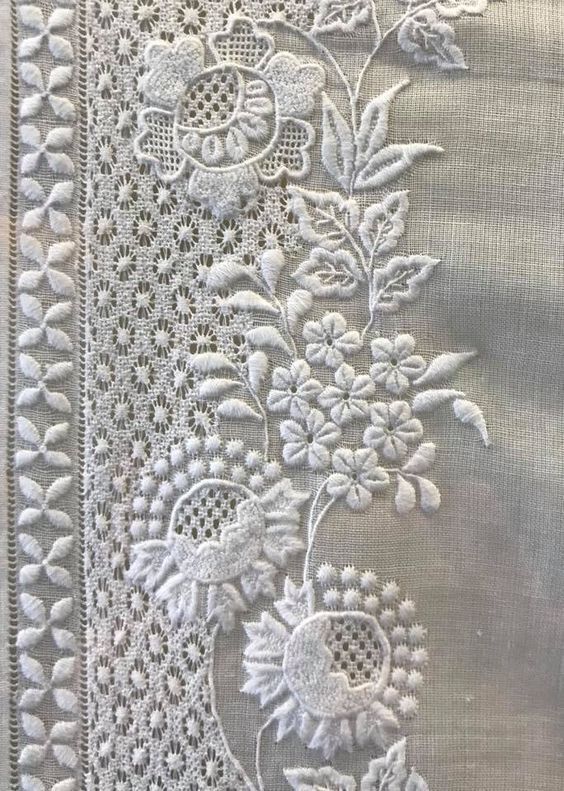
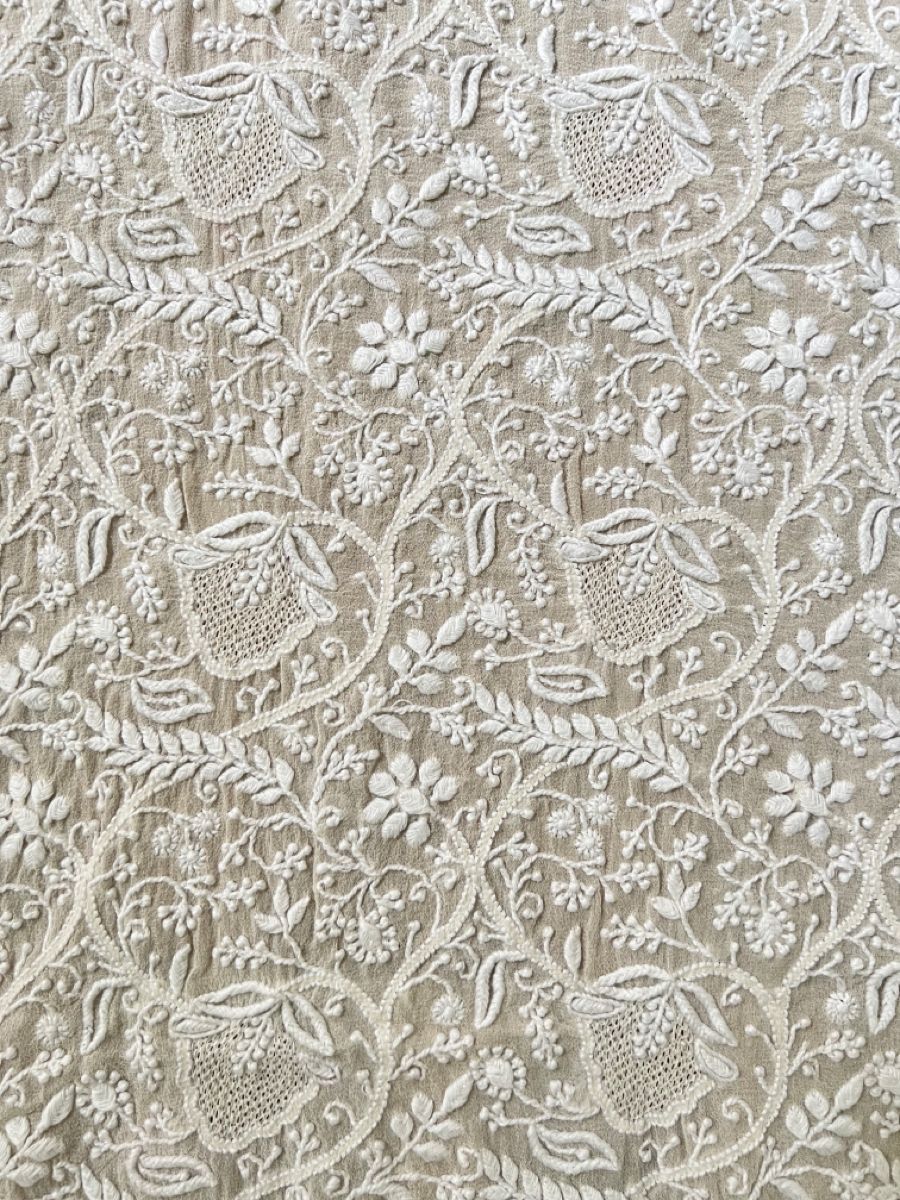
There is a myth that color is the only factor that creates beauty. Chikankari subtly discards this idea. By using a delicate white thread embroidered onto a white fabric, it creates pattern not through contrast but through the textile, shadow and craftsmanship.
The art form lies in the subtlety. When the light falls on the fabric, the raised stitches create soft highlights and shadows, very much similar like snowflakes resting on snow, or just like the moonlight shimmering on the still water. The embroidery does not look for immediate attention instead it rewards the patience. It welcomes the viewer to look closely, to notice the intricacies of each stitch and the art behind its execution.
Chikankari resembles patience and quiet confidence. Each motif floral vines, paisleys, jaalis (net pattern) is formed through hours of careful hand work. The absence of bold colors enhances the skills that are required, as there is no distraction from the technique itself. The beauty of this is structural not superficial.
White in Chikankari represents purity, peace and grace. It carries an understated authority that dictates never loud, never overwhelming. It teaches that refinement often exists in the softest forms. The embroidery feels timeless because it does not follow trends, it follows tradition and precision.
Key Takeaways
Chikankari proves that beauty can exist beyond color
White-on-white embroidery emphasizes texture over contrast
The craft symbolizes patience, elegance, and quiet confidence
Subtlety enhances timelessness
True artistry does not demand attention—it earns it